Your Guide to Elegance: Fine Dining Guide

Fine dining offers a delightful experience that goes beyond just savoring delectable dishes. It's an opportunity to immerse ourselves in a world of refined taste, sophistication, and timeless traditions. At the heart of this experience lies the importance of fine dining etiquette – a set of rules and guidelines that elevate the dining experience to a level of elegance and grace. Whether you are attending a formal business dinner, a special celebration, or simply want to appreciate the art of dining, mastering fine dining etiquette is essential.
I have been a part of the Fine dining restaurant scene as well as banquets throughout my years in the hospitality industry. There’s always that one person looking around, unaware of what to do and when to do it. In this post, we will explore the essential aspects of fine dining etiquette to help you make a lasting impression during your next upscale dining experience.
Plan Ahead
The Art of Seating
The Napkin Ritual
Understanding Place settings
Being Served
The Art of Conversation
Wine Etiquette
Navigating the Table
1. Plan ahead
When planning on eating at a Fine dining restarts you should plan ahead. This means calling ahead to make reservations. Typically you can call the week you plan on eating at the establishment, but I will advise you to call when you are planning your trip to popular destinations. If you are traveling to a nice, heavily tourist location and have a restaurant in mind, call ahead. These places tend to be booked weeks or months in advance, especially during peak season.
2. Dress to Impress
The first step to fine dining etiquette begins with dressing appropriately for the occasion. Always adhere to the dress code specified by the restaurant or event invitation. For men, this often means wearing a well-tailored suit or dress slacks paired with a dress shirt and tie. Women may opt for a sophisticated cocktail dress, elegant gown, or dressy separates. Remember, clean, pressed clothing and a well-groomed appearance are fundamental aspects of fine dining etiquette. When you call to book your reservation, ask about the dress code, if they do not mention it to you upon booking.
3. The Art of Seating
Upon arrival, wait to be seated by the host or hostess. If you are unsure of where to sit at a formal event, allow the elders or the guests of honor to take their seats first. Remember to keep an eye on your posture, sit up straight, and avoid slouching.
4. The Napkin Ritual
When seated, follow the lead of your host and unfold your napkin, placing it on your lap. This small gesture shows respect and readiness to start the meal. If the napkin presented is a large napkin, unfold it halfway. If you are dining at a restaurant, place the napkin in your lap as soon as you take a seat. When there is a napkin ring, place the ring at the top left side of your table setting.
If you need to excuse yourself during the meal, place the napkin on your chair. Unless it’s an informal setting or restaurant, it will be acceptable to place the napkin on the left of your plate. During your meal keep the napkin in your lap when not in use. It is acceptable to use your napkin often. Remember to blot or pat your mouth, near wiping. Bonus points if you wipe your mouth before taking a drink. At the end of the meal, fold the napkin neatly and place it to the left of your plate.
If you talk with your hands, make sure your napkin isn’t a part of the conversation
5. Understanding Place Settings
A formal dining table may appear daunting with its array of utensils and glassware, but it's not as complex as it seems. Start with the outermost utensils and work your way inward with each course. If you are unsure, observe your host or follow the flow of the meal. The bread plate is located to your left, and the water and wine glasses are to your right. If you look at the diagram I have made below you will have a visual of where everything is located. Note that the dessert fork will either be already set up on your left, at the top of your plate or they will bring it with dessert. If you are ordering Steak, fish, or something that requires additional utensils your wait staff will exchange or add the proper utensils after you order or before the meal.

6. Being Serving
When the food is being presented the wait staff will present the food from your right side. Be aware of this, especially if you talk with your hands. Please give them the allotted space to present the next course. When they return after the course they will pick up your plate from the left side of you.
7. Mastering Silverware Savvy
As mentioned earlier, using the appropriate silverware is vital in fine dining. Remember these basic rules:
Forks are typically on the left and are used for the main course and appetizers.
Knives are on the right and are used for cutting food.
Spoons are also on the right, usually next to the knives, and are used for soups or desserts.
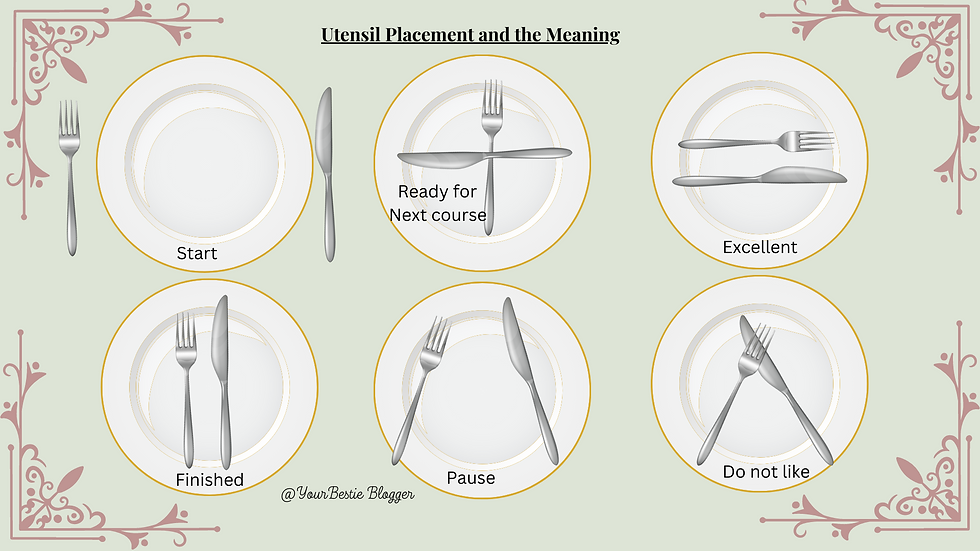
Once you start eating with your utensils do not put them down on the table, but place them on the edge of your plate
8. The Art of Conversation
Engaging in polite and meaningful conversation is crucial during a fine dining experience. Avoid discussing sensitive topics like religion, politics, or controversial issues. Instead, talk about lighter subjects, such as travel, hobbies, or the arts. Be attentive to your dining companions and avoid using your phone, except for emergencies. Personally, I don’t talk about religion, but my relationship with God comes up at least once during any conversation.
9. Wine Etiquette
If wine is served during the meal, familiarize yourself with some basic wine etiquette. Wait for the host or sommelier to pour the wine, and if you don't drink alcohol, discreetly decline. Hold the wine glass by the stem to avoid warming the wine with your hand, and take small sips to appreciate its flavors fully.
10. Navigating the Table
Avoid reaching across the table to grab something. Politely ask for items to be passed to you, and always use the serving utensils provided. Remember to say "please" and "thank you" during these interactions.
Mastering the art of fine dining etiquette is not about rigid rules or showing off, but rather about embracing a sense of respect, grace, and sophistication. By adhering to these guidelines, you can make your dining experience more enjoyable and memorable, both for yourself and those around you.
Remember, the essence of fine dining etiquette lies in appreciating the company, the culinary delights, and the shared moments of joy and connection around the table. So, the next time you find yourself at an upscale dining event, embrace the opportunity to showcase your elegance and grace through the timeless art of fine dining etiquette.
Bon appétit!
-Sierra, Your Bestie Blogger.
Comments